Pet-Friendly Detection –
For many homeowners in Otley, pets are an important part of daily life. However, pets can also create challenges for domestic burglar alarm systems if detectors are not selected or positioned correctly.
Older alarm systems often struggled with:
- cats moving through rooms
- dogs walking across detection areas
- or general household movement
This sometimes resulted in:
- false alarms
- reduced confidence in the system
- or homeowners avoiding full alarm use altogether
Modern pet-friendly burglar alarm technology has improved significantly and now allows many homes to maintain strong security without constant unwanted activations.
What Is Pet-Friendly Detection?
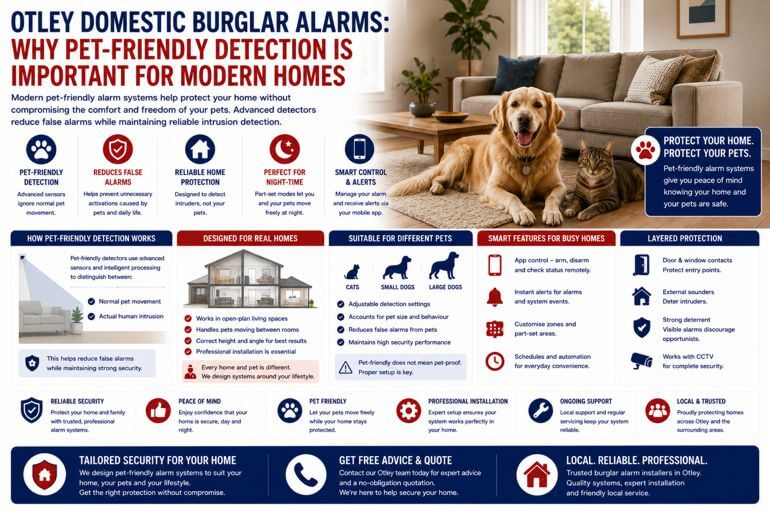
Pet-friendly detectors are designed to reduce activations caused by normal animal movement within the home.
These detectors use:
- improved sensor technology
- advanced signal processing
- and more controlled detection patterns
to better distinguish between:
- pets
- and genuine human intrusion
False Alarms Often Lead to Poor Alarm Usage
One of the biggest problems with poorly designed domestic alarm systems is that homeowners may:
- stop using the system fully
- leave areas unset
- disable detectors
- or ignore activations completely
Reliable pet-friendly protection helps ensure alarm systems remain practical for everyday use.
Modern Homes Often Have Open-Plan Layouts
Open-plan living spaces are increasingly common in modern homes around Otley.
Large connected areas can create challenges because:
- pets move freely between rooms
- stair access may remain open
- and wider detection zones are required
Correct detector positioning becomes especially important in these environments.
Detector Height and Angle Matter
Pet-friendly motion detectors must be:
- installed at the correct height
- angled properly
- and positioned carefully
Poor installation may:
- reduce effectiveness
- create coverage gaps
- or increase false alarm risk
Professional setup remains essential even with advanced detector technology.
Different Pets Create Different Challenges
Not all animals affect alarm systems equally.
Factors include:
- pet size
- movement patterns
- climbing behaviour
- and room access
For example:
- larger dogs may require different detector settings
- cats climbing furniture can affect some sensor arrangements
- multiple pets may increase complexity
Pet-Friendly Does Not Mean Pet-Proof
Even modern detectors still have operational limits.
Issues may still occur if:
- pets climb near sensors
- furniture placement changes
- heating sources interfere
- or detectors are incorrectly positioned
System design should always reflect the actual home environment.
Night-Time Protection Still Works Effectively
Pet-friendly systems can still provide strong overnight protection using:
- part-set modes
- perimeter protection
- and selective zoning
This allows homeowners to:
- move around safely
- allow pets freedom in selected areas
- and maintain security overnight
Additional Detection Methods Improve Reliability
Many modern domestic alarm systems combine pet-friendly motion detection with:
- door contacts
- shock sensors
- external sounders
- and smart notifications
This layered approach strengthens protection while reducing dependence on one detector type.
Smart Systems Improve Control
Modern alarm systems may allow homeowners to:
- isolate specific zones
- adjust system modes
- receive app notifications
- and monitor activity remotely
This flexibility helps households balance:
- convenience
- pet movement
- and home security
Pet Ownership Should Never Mean Reduced Security
Some homeowners mistakenly believe:
- alarm systems are unsuitable for pets
- or full protection is impossible with animals inside the home
Modern systems are specifically designed to accommodate occupied family homes while still providing reliable intrusion detection.
Maintenance and Testing Remain Important
Pet-friendly systems still require:
- routine servicing
- detector testing
- battery inspection
- and occasional recalibration
Changes such as:
- new pets
- furniture movement
- or room alterations
may also affect detector performance over time.
Modern Alarm Systems Must Fit Real Family Life
For homeowners in Otley, effective burglar alarm systems should work around:
- family routines
- occupied homes
- and pets
Professionally designed pet-friendly alarm systems help provide:
- reliable protection
- fewer false alarms
- stronger overnight security
- and greater day-to-day confidence
Modern home security should adapt to the household — not force the household to adapt to the alarm system.
Frequently Asked Questions
What is a pet-friendly burglar alarm detector?
It is a motion detector designed to reduce activations caused by normal pet movement.
Can alarm systems work with dogs and cats?
Yes. Modern systems are commonly designed for occupied homes containing pets.
Do pet-friendly detectors still need professional installation?
Absolutely. Correct positioning and setup are essential for reliable operation.